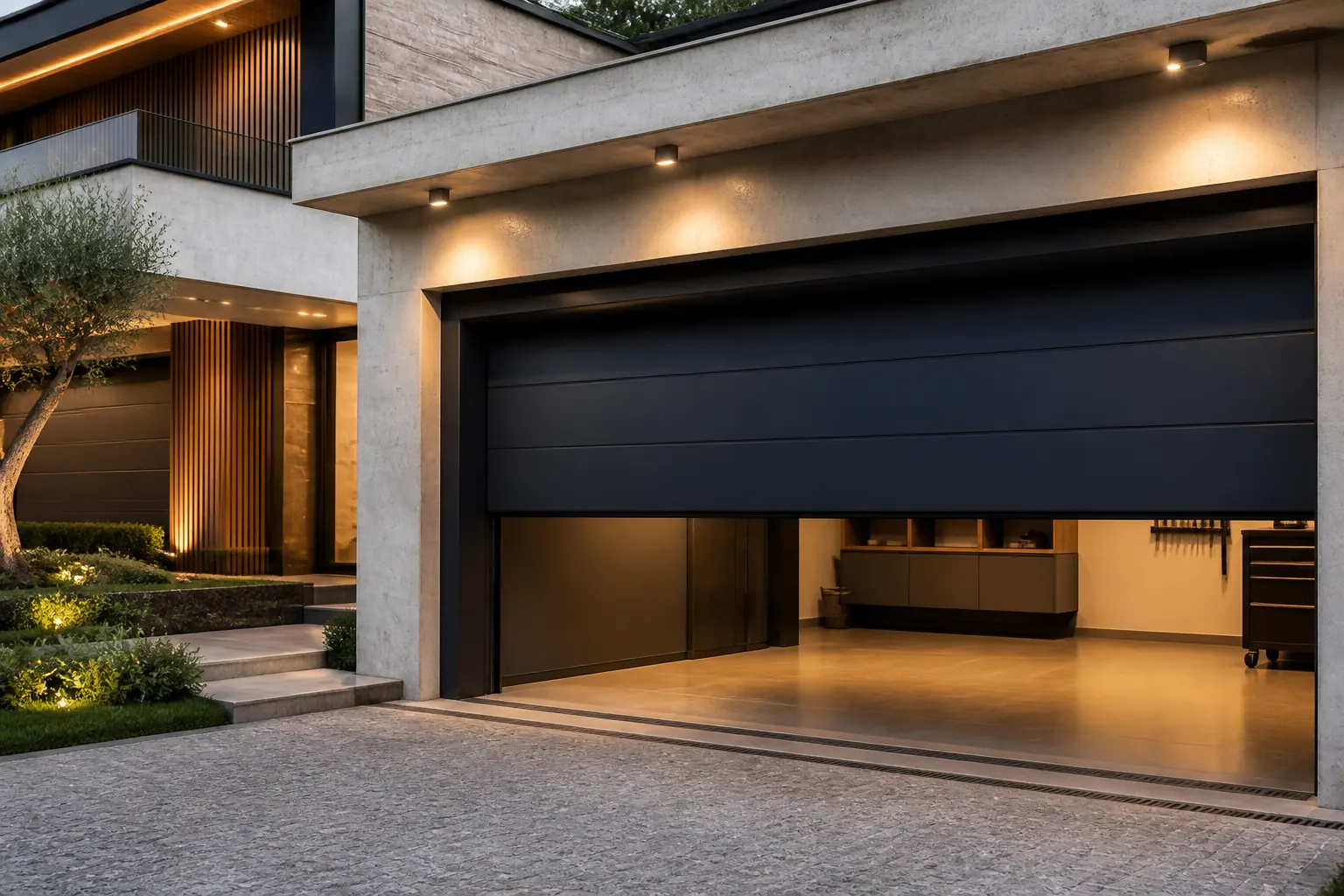
Garage door options
Sectional doors travel into the ceiling area and preserve approach space, while rolling systems need an adequate coil zone above the opening. An existing balanced door may sometimes accept a retrofit operator after mechanical checks.
Residential and shared use
Low noise and simple controls matter at private homes, while apartment garages require an operator rated for more users and cycles. Receiver capacity and credential management should be considered before remotes are issued.
Clearances and structure
Headroom, side room, ceiling services, floor level and the parking position affect the practical design. Track and spring supports must be anchored to a suitable structure and aligned before motor commissioning.
Safety and manual access
Photocells, safety edges or force monitoring may protect the movement area according to the door type. If the garage has no separate entrance, an accessible manual-release arrangement deserves particular attention.
Maintenance and repair
Noise, incomplete closing or a straining motor may originate from tracks, rollers, springs, cables, sensors or controls. Springs and lifting cables should not be adjusted by users because a fault can leave the door dangerously unbalanced.
Send dimensions and photographs for Automatic Garage Doors
Share the site, opening dimensions and expected use so we can clarify suitable equipment and installation scope.
Frequently asked questions
What to know about Automatic Garage Doors
Can a motor be fitted to an existing garage door?+
It may be possible if the door is balanced, mechanically sound and compatible with an operator.
Is a domestic motor suitable for an apartment garage?+
Not always; the expected daily cycles and number of users may require a higher-duty system.
How can the door open in a power cut?+
Manual release or backup power can be considered, depending on the door and operator.
Why is the garage door noisy?+
Dry or worn rollers, track alignment, hinges, springs or the operator may contribute and should be inspected.